Career Tech: Innovation or Illusion? The Human Heart of Career Guidance in the Age of AI
Share this
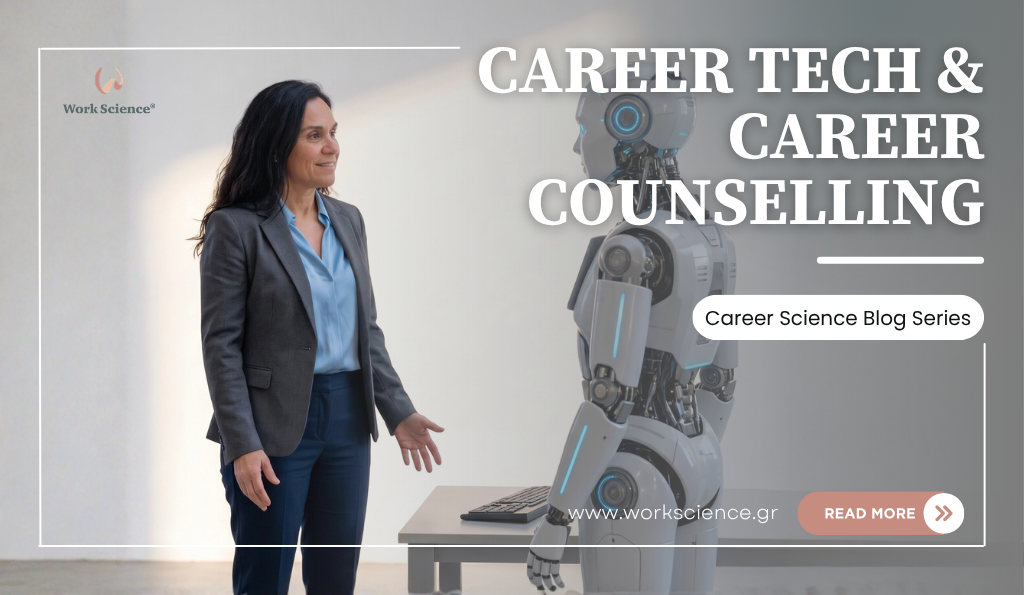
Careers today are being shaped by a relentless wave of technological development, most notably artificial intelligence. What we now call ‘career tech’ encompasses a vast array of digital solutions, online platforms, and AI-powered tools that promise to transform the landscape of career guidance, career management, and job searching. These solutions are widely presented as accessible innovations – quick, easy, and tailored to the individual.
But what does the career tech market really offer and to whom?
The global market for digital career guidance platforms and tools has already surpassed $1.8 billion, with forecasts suggesting it could reach $4 billion over the next decade.1 The commercial interest is immense and understandably so: workplace uncertainty, the rise of digitally native generations, the ever-increasing demand for flexible learning, and the rapid shifts brought by AI and automation are all encouraging more professionals to seek ‘smart’ solutions for their careers.
Worldwide, hundreds of millions of people are searching for tools, information, and advice to reposition themselves, take the next step, or make themselves more competitive. Demand is tangible and profits easily calculated, making this field ideal for any digital giant looking to expand its data assets. Companies like Google, Microsoft, LinkedIn, along with a host of startups and niche providers, are moving decisively into the sector.
For example, Google’s Career Dreamer claims its aim is to ‘democratise career exploration’ – to provide immediate information, alternative career pathway suggestions, and bespoke development plans. The pitch is appealing, especially for younger generations, expats, career-changers, and anyone curious to explore something new or different.
Career Tech in Practice: Opportunities & Problems
Let us first consider the strengths of these tools:
- They offer speed in identifying your skills and matching them to suitable occupations.
- They harness a huge, constantly updated volume of data to present job market trends, allowing for more informed decisions and career strategies.
- They ensure convenient access – at home or on the go – removing geographical and social barriers.
- They promote user autonomy: you don’t need a specialist to set up your account and begin exploring.
But what about their limitations?
- Standardisation and generic answers:
Most tools operate using questionnaires, ‘tick boxes’, and big data models that detect patterns, not personal stories. For example, an algorithm may suggest ‘creative occupations’ if you express an interest in art – the same as an untrained coach relying on off-the-shelf quizzes. But it will never touch the internal conflicts, pressures, fears, or traumas beneath the surface. - Lack of empathy and emotional attunement:
No algorithm can sense anxiety or burnout. It cannot step into the shoes of a person falling apart emotionally, nor can it offer real emotional support. - Cultural and social nuance:
These tools are often built around international best practices and generalisations, which can easily miss the complexities of local culture (like the preference of Greeks for the public sector or the expectations on children of immigrants). - Motivation, internal values, and conflict:
People do not operate based solely on their skills or their apparent interests. Internal conflicts, deep-seated experiences, and formative values play a major role in why and how we make career decisions. Choosing a career is an act of identity, not just a rational selection.
The Commercial Imperative: Algorithm as Adviser
Career guidance has become easier to ‘package’: questionnaires, skills assessments, algorithmic matching, and data-driven suggestions. Unsurprisingly, tech companies have rapidly developed these tools – a billion-dollar market, cheap automation, impersonal (but ‘efficient’) advice that can be delivered en masse. Career tech is the perfect way to collect data, track outcomes, monetise personalisation, and keep users locked into your platform.
In contrast, true career counselling demands relationship-building, a genuine investment of time, attentive support, ethical consideration, and authentic care. These qualities cannot be scaled. They do not lend themselves to automation and cannot be sold as a ready-made product.
What Gets Lost When You Rely Only on Tools?
No technology, however advanced, can replace the essence of human connection and the deeply interactive process between counsellor and client. An algorithm cannot pick up on fears unspoken, dreams never voiced, or provide comfort. It cannot support clients facing emotional issues – like anxieties, doubts, family pressures, or unhealed wounds – nor can it appreciate cultural nuances.
The client who genuinely wants to change, develop, and move forward with authenticity needs tools as a foundation, but a human being as a co-traveller:
- To help uncover deep-rooted obstacles,
- To navigate inner contradictions,
- To provide support at emotional and cultural depth,
- To ensure that the chosen career path feels free and sustainable.
Conclusion
Career tech solutions are useful tools – they can broaden your perspective, push the conversation forward, provide direction, and ease information overload. But true clarity and, above all, the inner strength to move ahead with self-knowledge and resilience come through dialogue with an experienced counsellor who knows how to listen deeply and to encourage each individual’s unique journey. In the new era of digitalised career information, the greatest “upgrade” is not digital but human: connection, compassion and wisdom in practice.
- Business Research Insights (2023), Market Reports World (2024) ↩︎