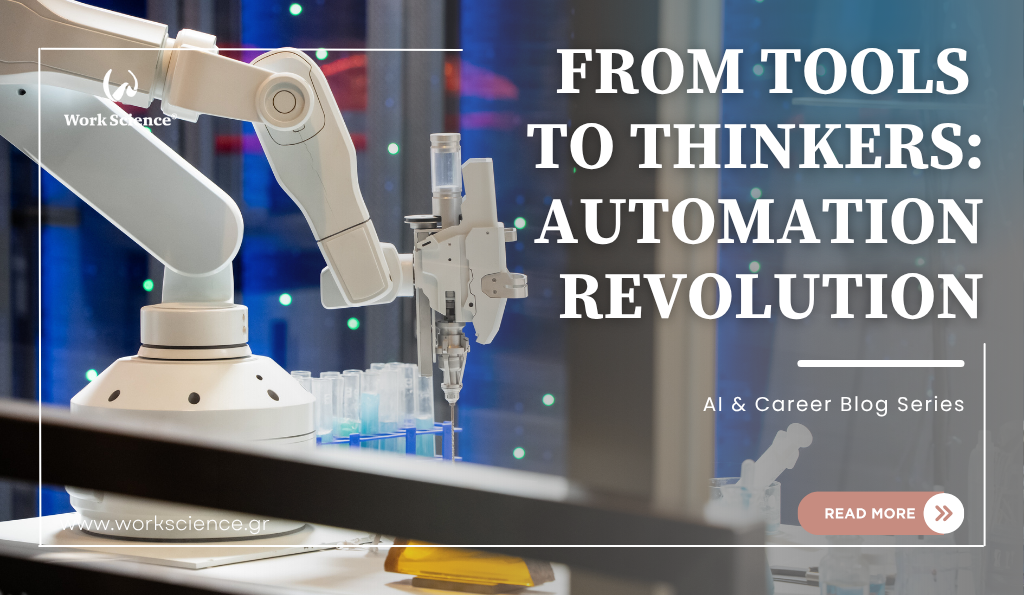
If the Industrial Revolution mechanised human muscle, the Automation Revolution is mechanising human thought. Artificial Intelligence (AI) is no longer confined to futuristic theories or science fiction. It is here, infiltrating industries with unprecedented speed and scale, reshaping business models, workflows, and even what work means for all of us.
From Tools to Thinkers
For decades, technology served as an extension of human effort, faster machines, sharper tools, more efficient systems. But AI represents a shift: it doesn’t just execute tasks, it learns, adapts, and decides. This capacity to mimic cognitive processes is what makes AI revolutionary, bridging the gap between routine automation and intelligent autonomy.
Industry by Industry Transformation
- Healthcare: AI is accelerating diagnostics, predicting patient risks and tailoring treatment plans. From radiology scans read in seconds to drug discovery powered by machine learning, the time between research and results has been slashed dramatically.
- Finance: Algorithms now analyze risk, detect fraud in real time and personalise banking experiences. Robo-advisors are democratizing wealth management once reserved for elites.
- Manufacturing: Smart factories powered by AI-driven robotics minimize errors, maximize precision, and adapt instantly to supply chain disruptions. Predictive maintenance reduces costly downtimes.
- Retail: Personalised recommendations, dynamic pricing and AI-driven inventory management are redefining the customer experience. Consumers no longer just shop; they experience curated journeys.
- Agriculture: AI-powered drones, sensors and predictive analytics optimize irrigation, detect crop diseases early and boost yields, making farming more sustainable and resilient.
The Human Question
While industries celebrate efficiency, the elephant in the room remains: what happens to jobs? The Automation Revolution isn’t just a story of machines replacing people, it’s about machines changing what people do. Roles heavy in repetition will inevitably shrink, but new opportunities are emerging in AI development, data science and ethical governance. The challenge is preparing the workforce to pivot, reskill and collaborate with machines.
Beyond Efficiency: The Creative Edge
AI is not merely about speed; it is unlocking creativity. Architects use AI to design smarter cities. Filmmakers experiment with AI-generated scripts. Scientists run simulations at scales impossible for humans alone. Far from eliminating human ingenuity, AI amplifies it, offering fresh perspectives and expanding what’s possible.
The Road Ahead
The Automation Revolution isn’t far away, it’s happening right now. Companies that use it wisely will succeed, while those that don’t may be left behind. The question is not whether industries will be reshaped, but how societies will adapt, govern and guide this transformation for the benefit of all. The future of work, business and innovation will be built not just on machines, but on the choices humans make about how to use them.